CanCater: a catering marketplace for feeding thirty people at noon
The brief
A Canadian catering platform built for group ordering — one place to feed a boardroom, a classroom or a job site.
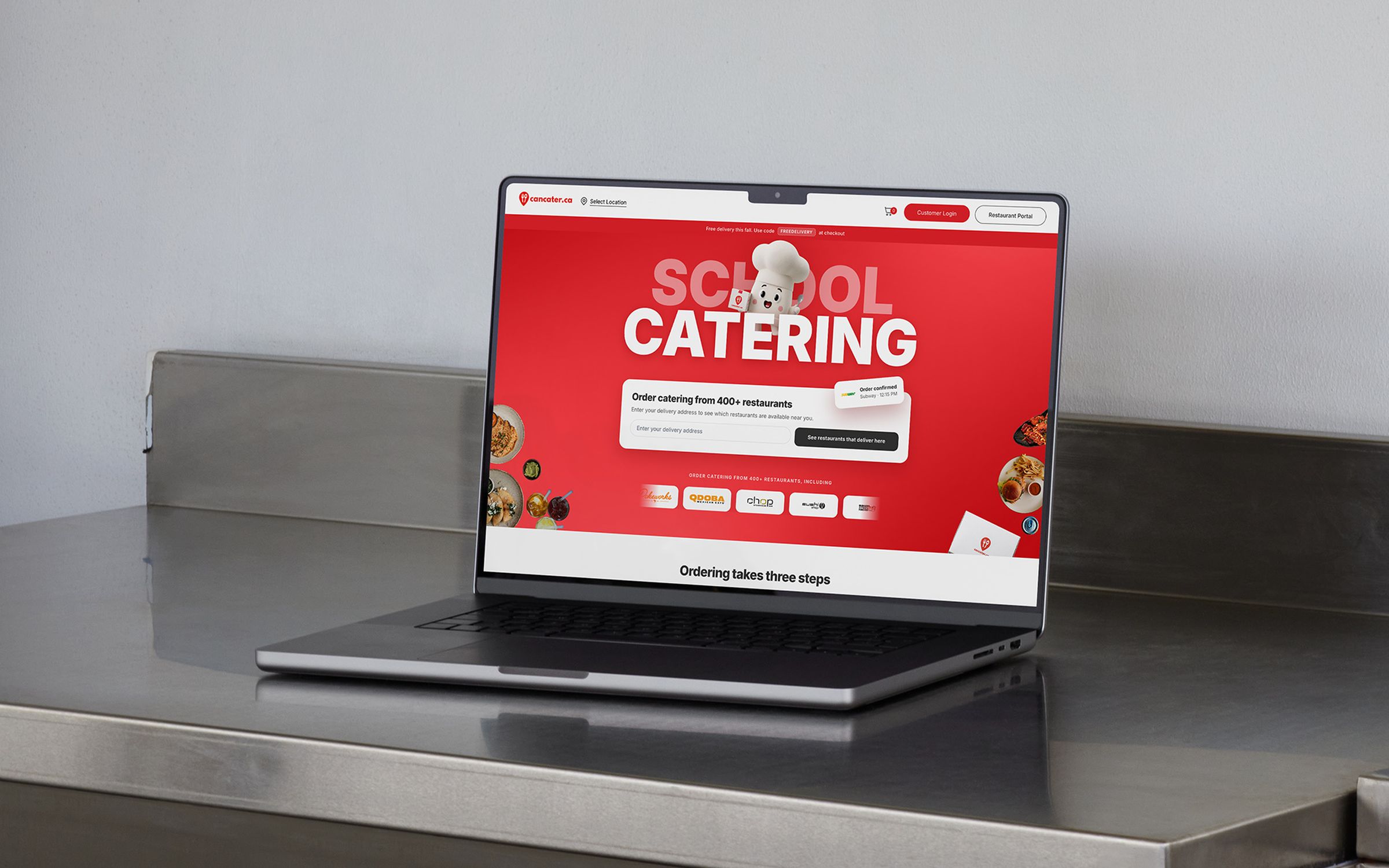
CanCater brings together 400+ restaurants that already cater every day, across Toronto, Mississauga, Brampton and the wider GTA, behind a single checkout.
We designed and developed the platform: the product thinking that turns a logistics problem into something a person can finish in three steps on a phone, and the build that runs it for customers, restaurants and corporate teams — findable in the moment someone actually searches for catering near them.

The problem
Catering for a group is a logistics job disguised as a lunch order.
The person arranging it is rarely a buyer by trade. They are an office manager, a teacher, a site supervisor — and they are doing it between other work. The old way meant calling restaurants one at a time to ask who delivers to a postal code, who can handle thirty covers, and who needs twenty-four hours’ notice. Then chasing an invoice, and having no idea where the food is at 11:50am.
Two problems sit underneath that. Dietary reality: one tray never satisfies a room — somebody is vegetarian, somebody needs halal, somebody just wants their own bowl. And budget control: letting everyone choose usually means losing track of the total.
Restaurants have the mirror image of the problem. Catering orders are the ones they want — bigger, planned ahead, easier to staff than a lunch rush — but sourcing that demand and running the delivery logistics is not what a kitchen is built to do.
The solution
One checkout across many kitchens — and an interface that answers the organiser’s questions before they have to ask.
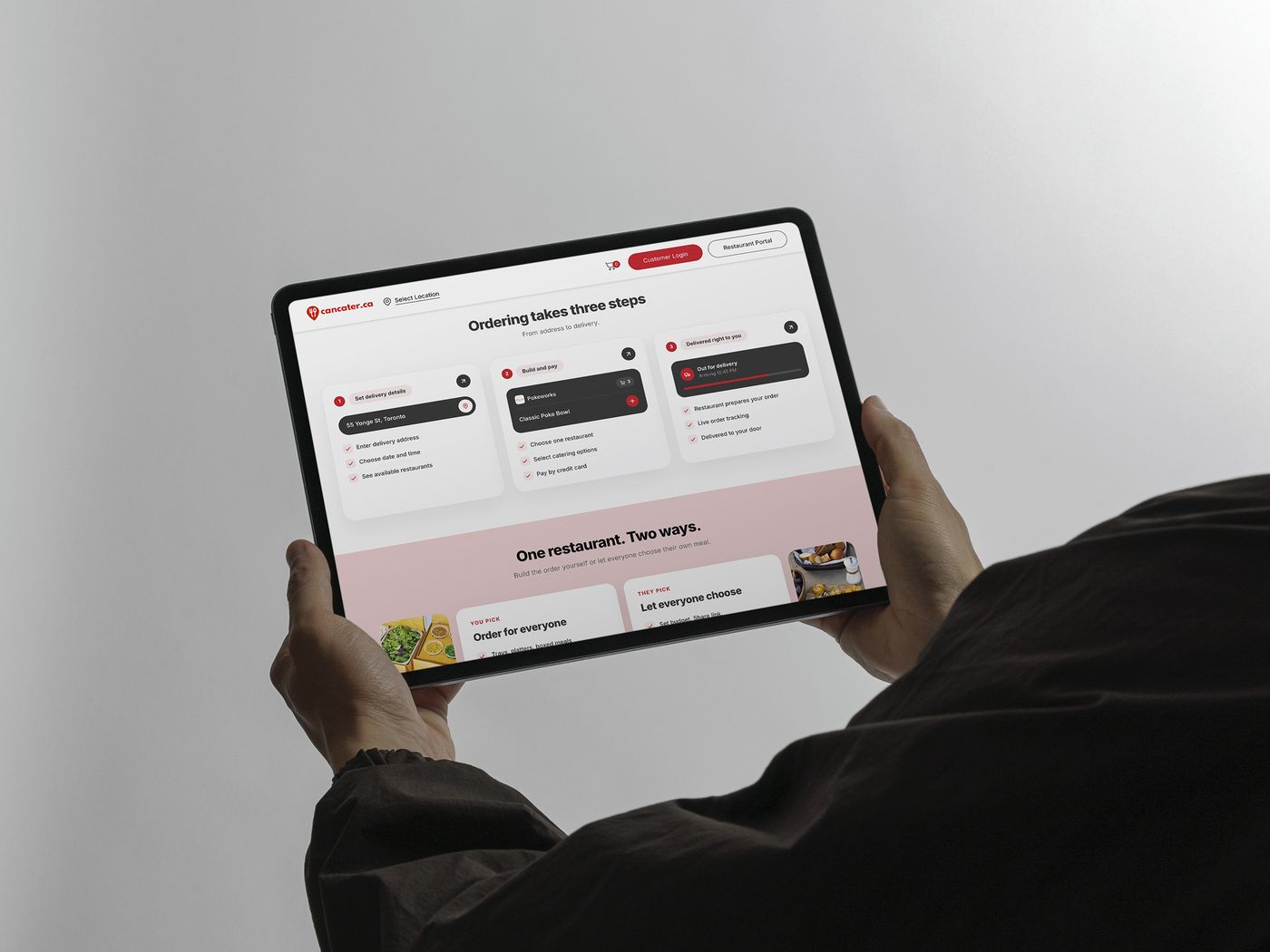
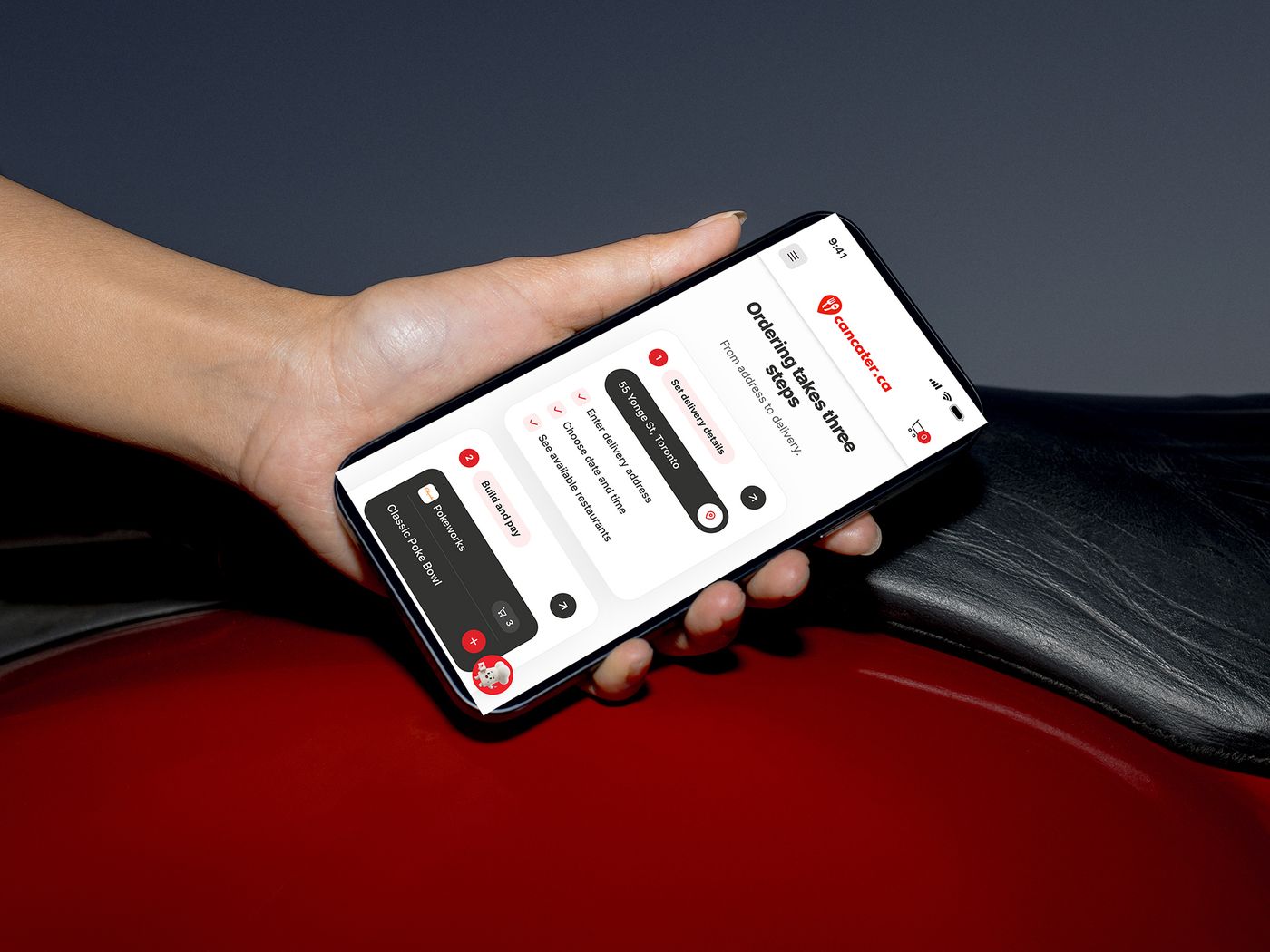
Address first, everything else after
The whole funnel starts with one field. Enter a delivery address, date and time, and the platform shows only the restaurants that can actually serve it. No browsing a menu you were never eligible to order from — the constraint becomes the first question instead of the last disappointment.
Two ways to order, because rooms differ
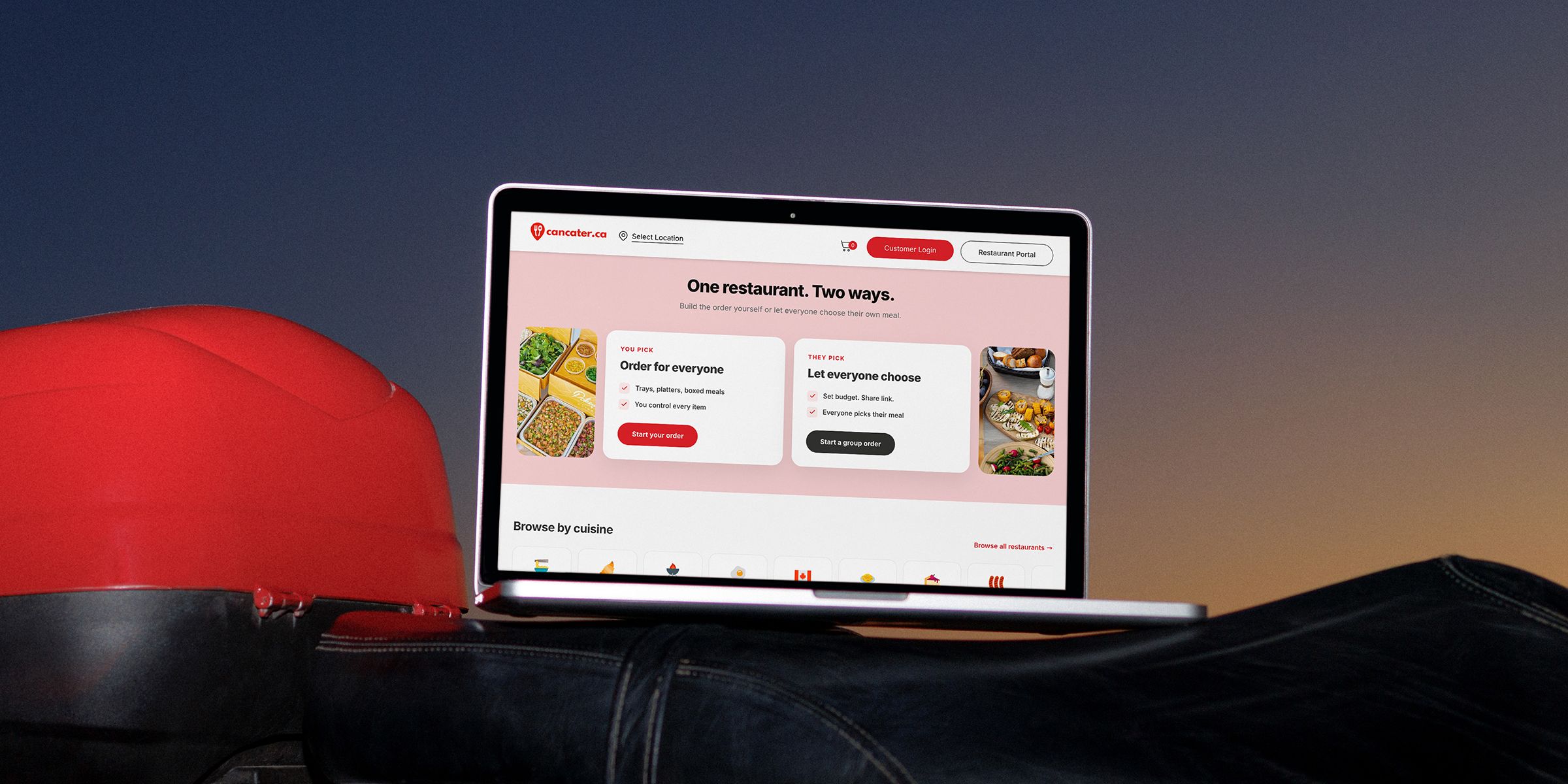
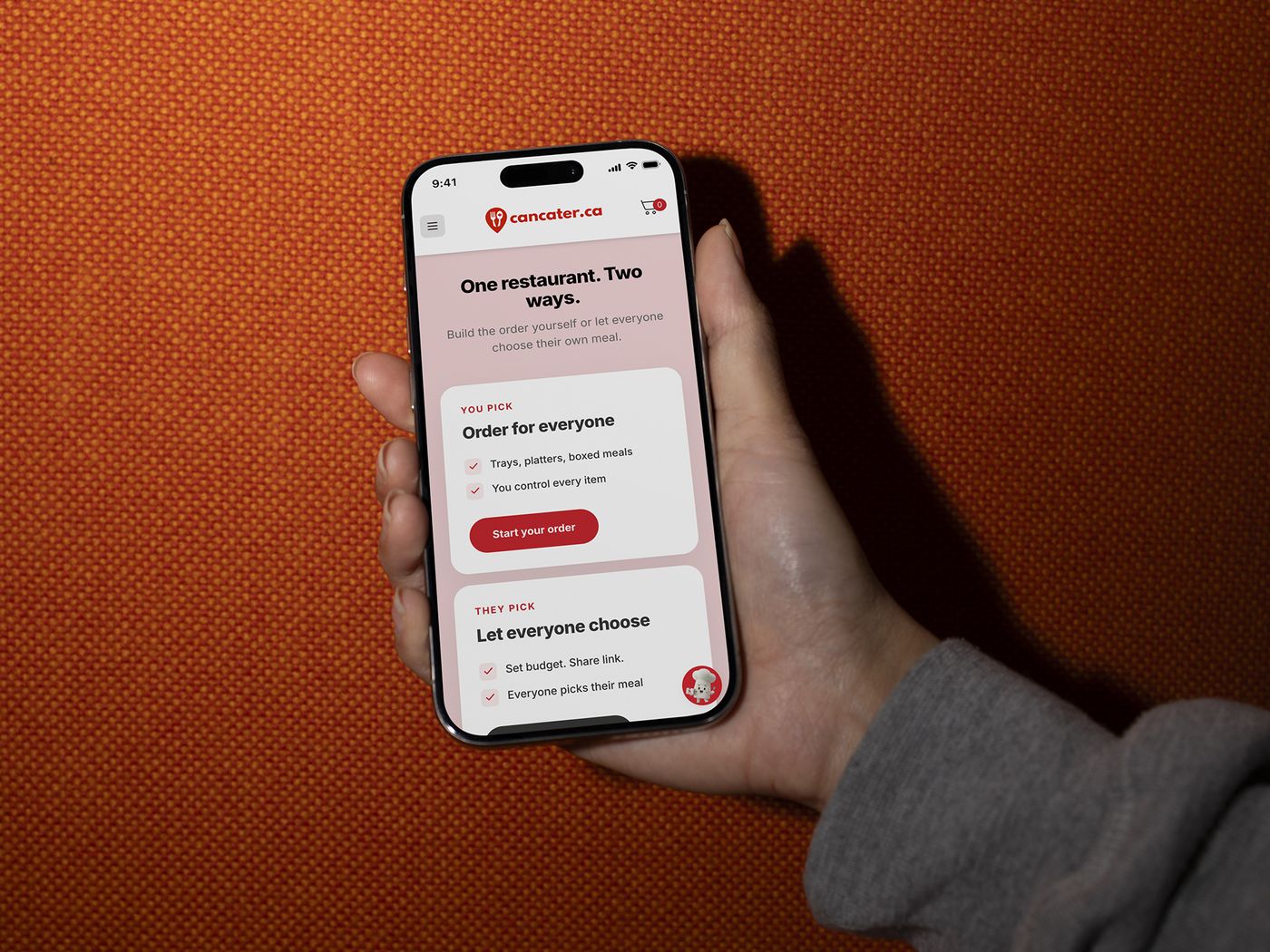
You pick: build the order yourself from trays, platters and boxed meals, controlling every item and the total. They pick: set a budget, share a link, and let everyone choose their own meal inside it. One flow solves the dietary problem, the other solves the budget problem, and both end in a single checkout.
Decide from the card, not the menu
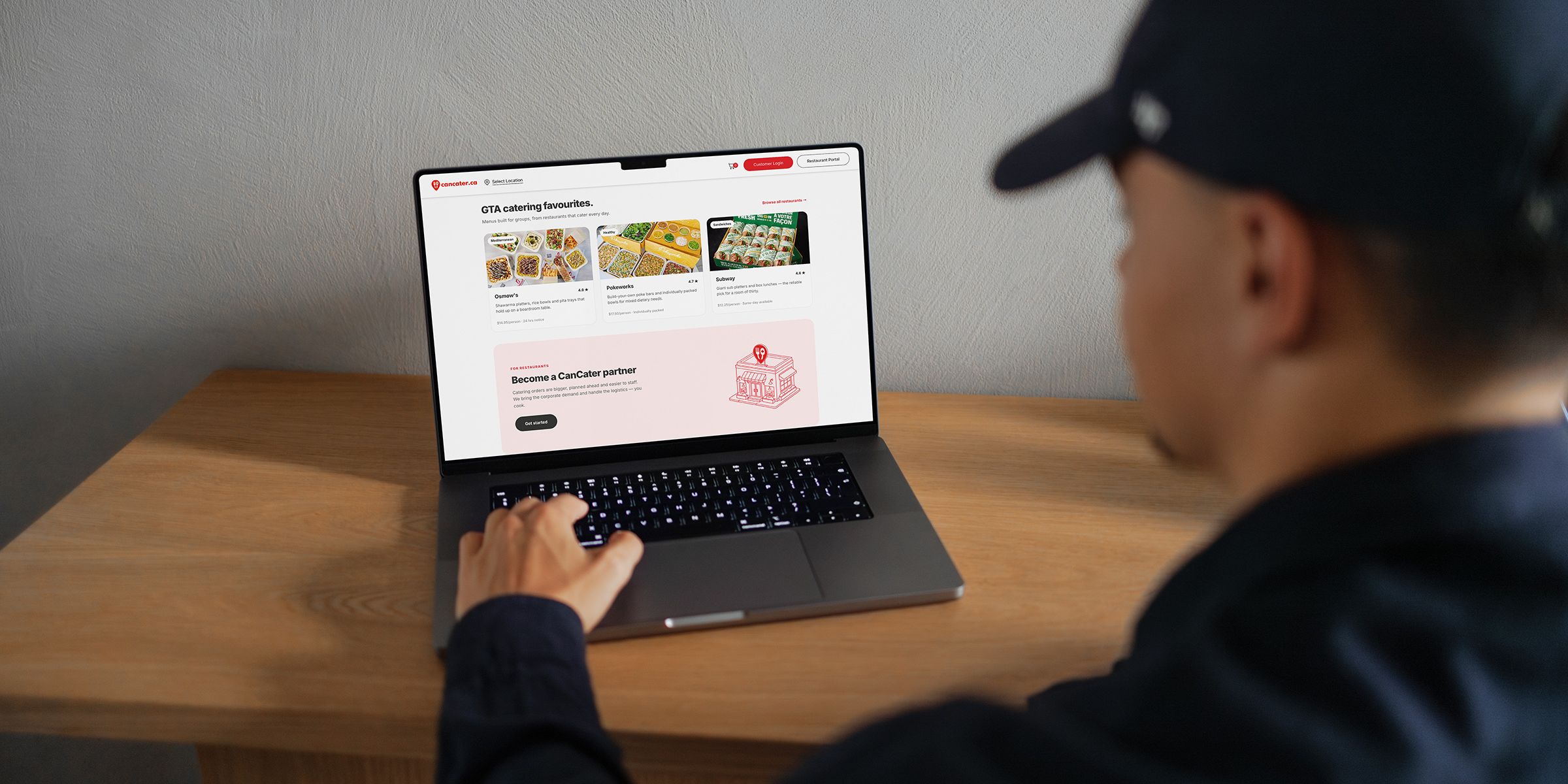
Restaurant cards carry the facts that decide a catering order: per-person price, notice required, and whether meals come individually packed. $12.25/person · same-day available tells an organiser more in four words than a menu does in four scrolls. Cuisine browsing — halal, vegetarian, Mediterranean, pizza — matches how the room actually argues about lunch.
Confidence through to the door
Order confirmation, restaurant preparation, live tracking and delivery. The nervous window for an organiser is the hour before the meeting, and that is precisely where most ordering experiences go quiet.
Found where catering is searched
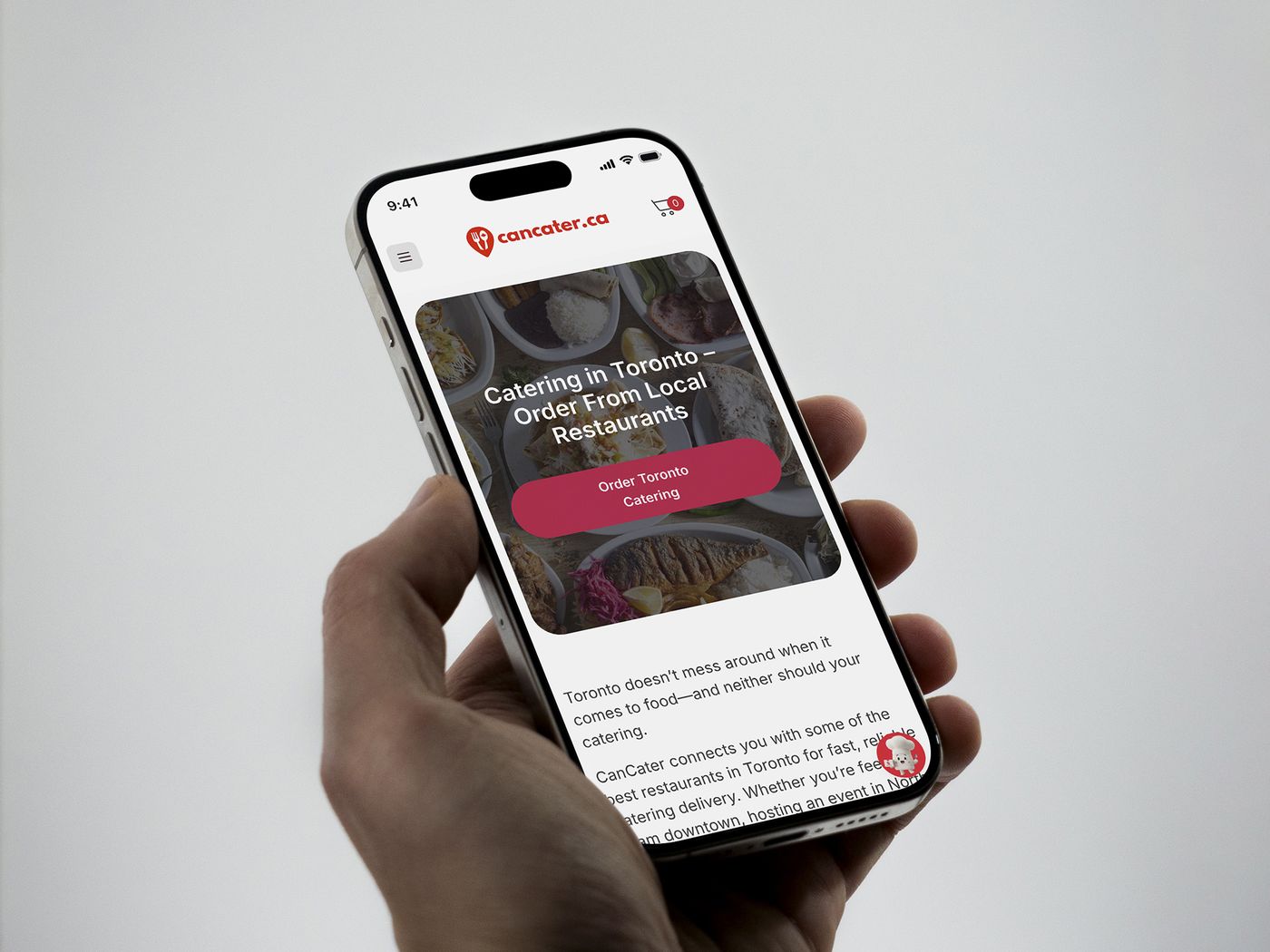
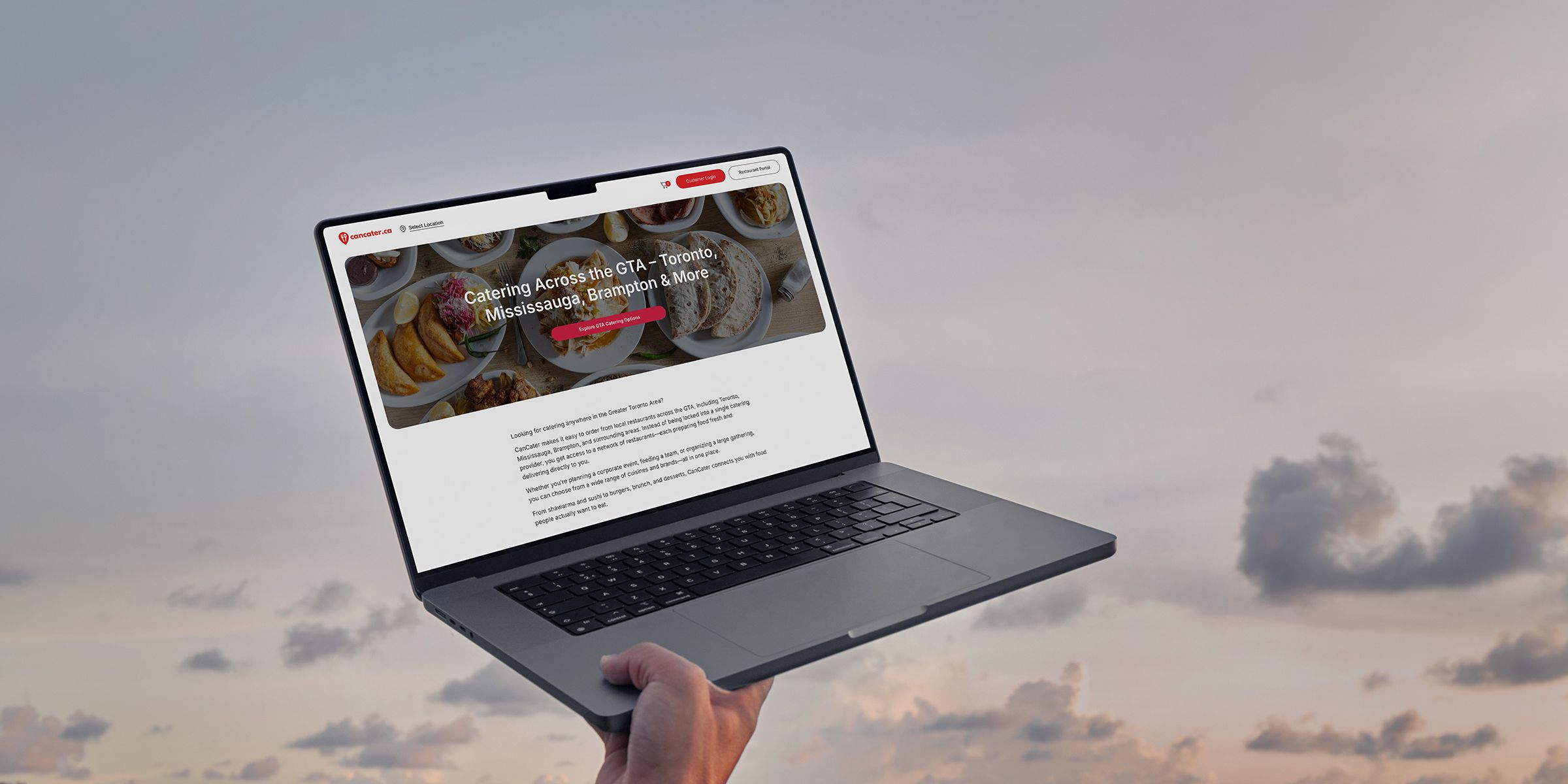
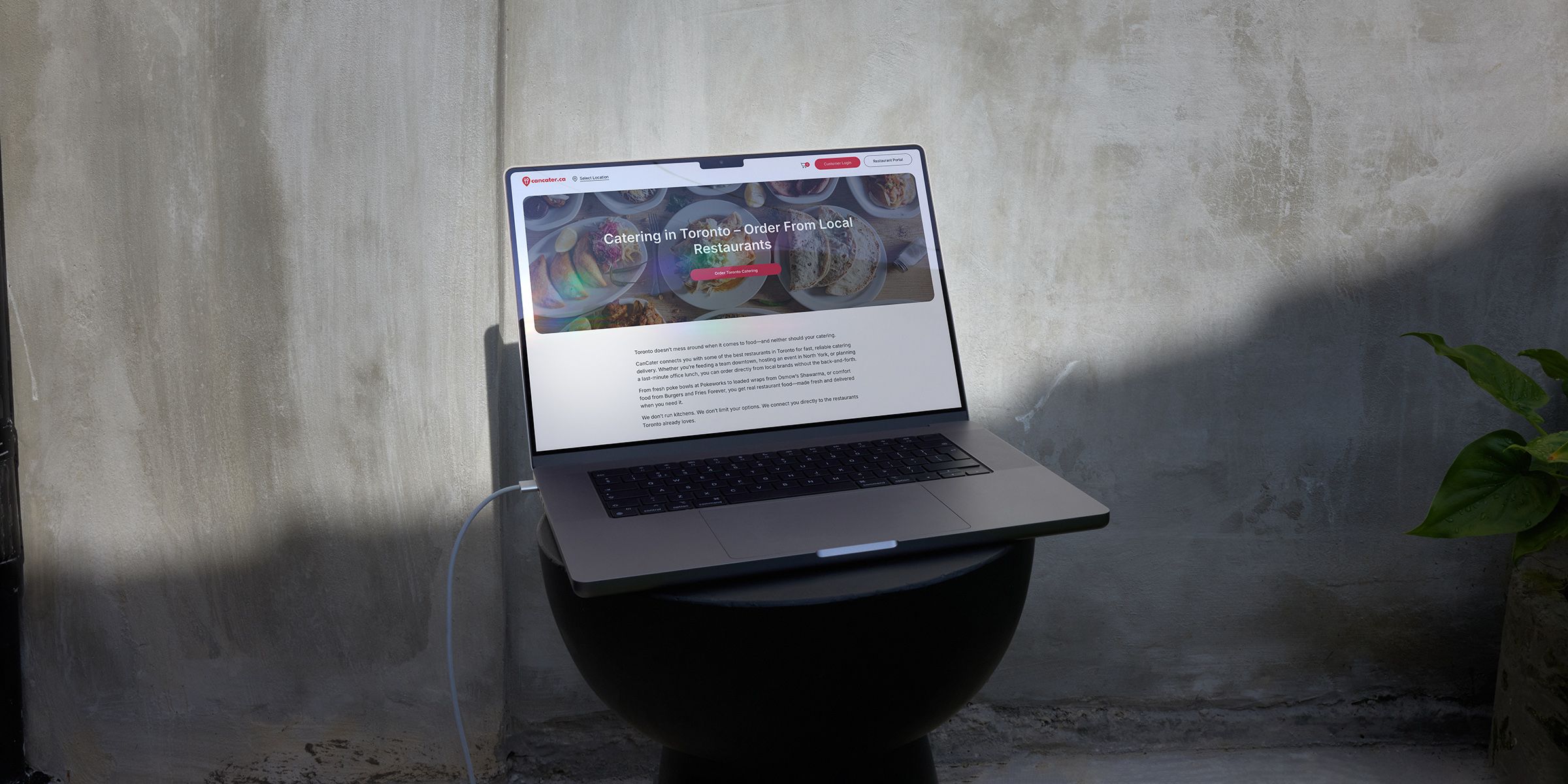
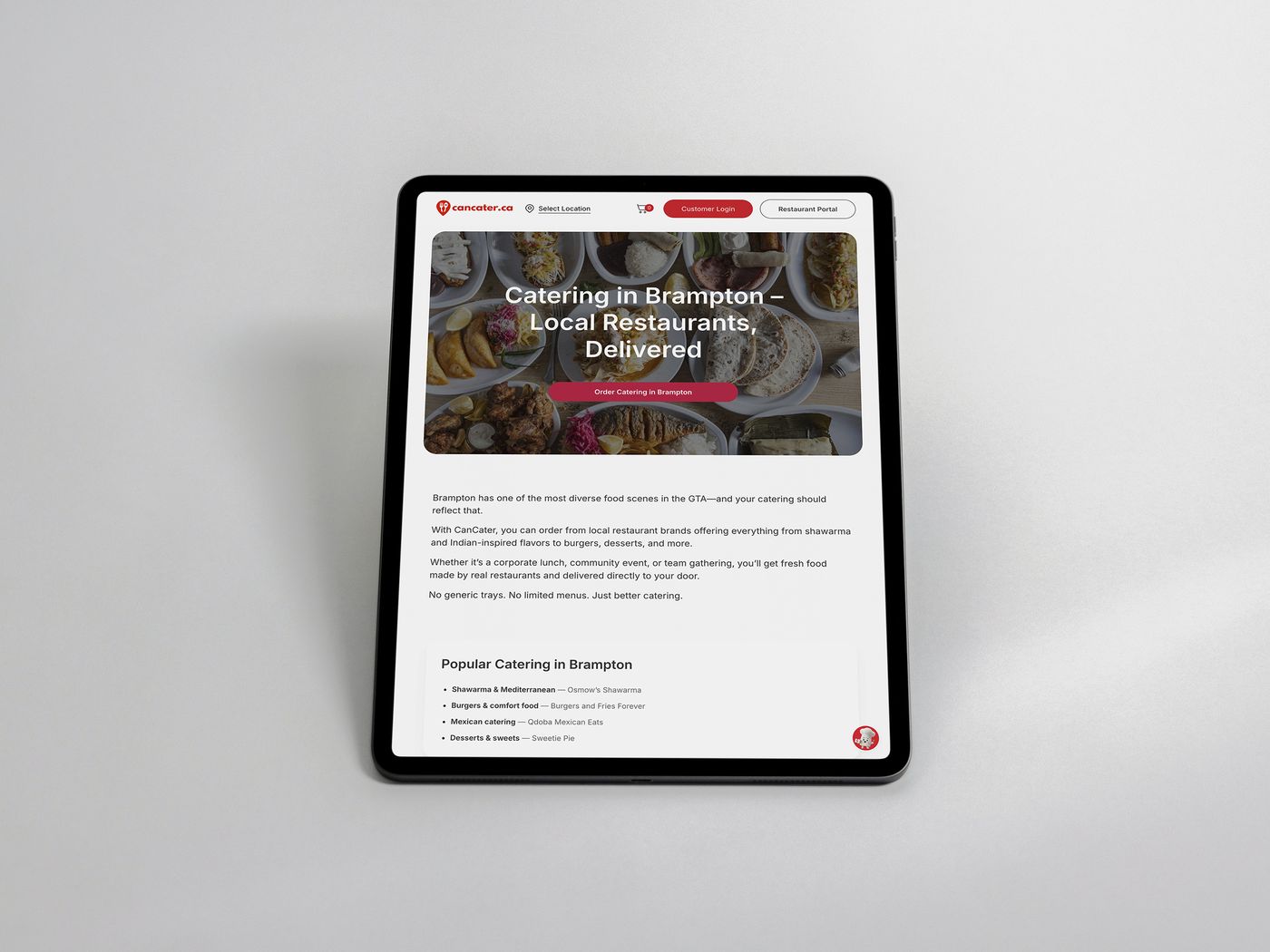
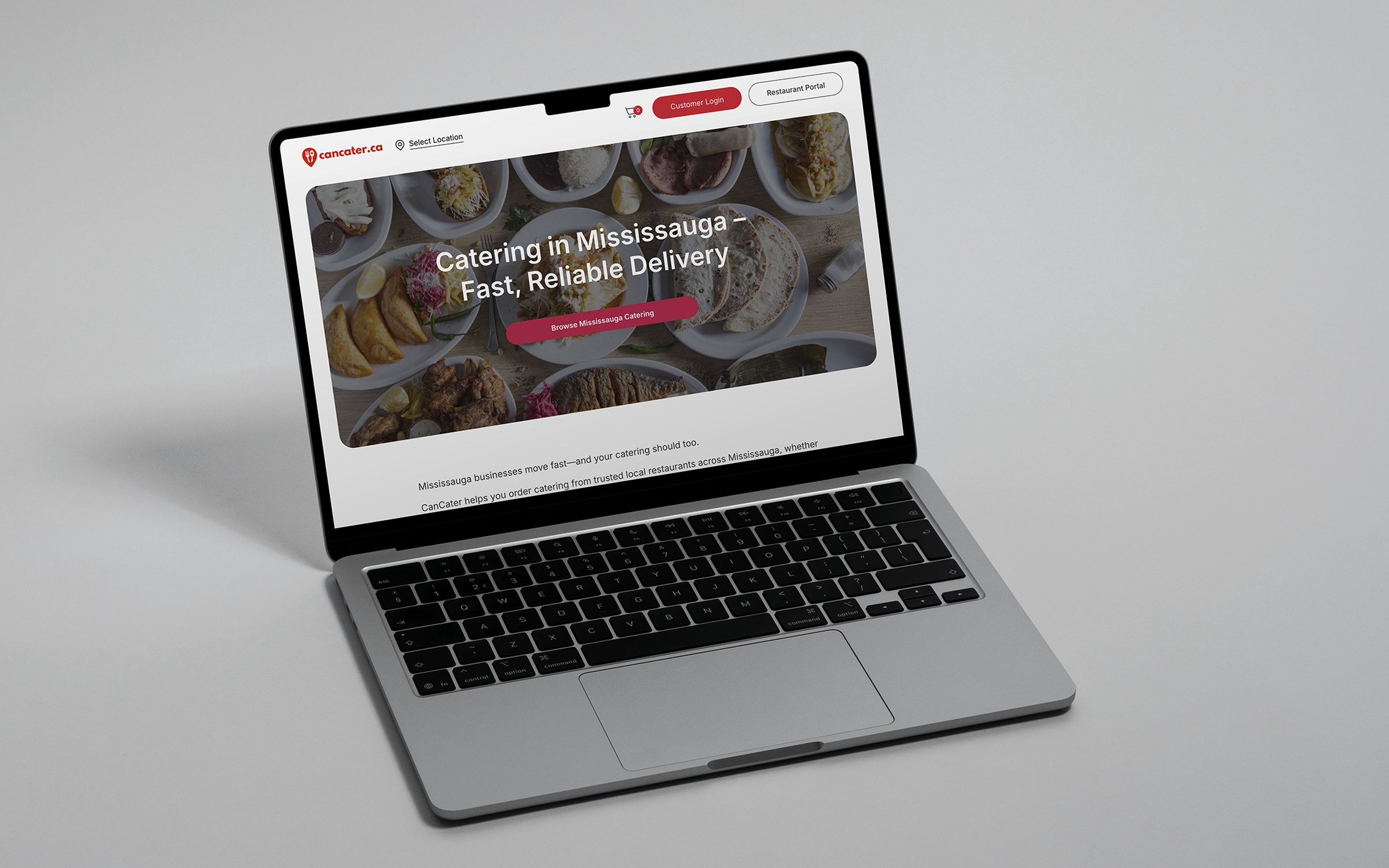
Demand for catering is local and immediate, so the platform is built around city pages — Toronto, Mississauga, Brampton and the GTA — each with its own landing experience rather than one generic page. That is how a marketplace earns local search instead of renting it, and it is the same approach we take to local SEO for every client.
Product design & development
We designed and built the platform itself — three products that have to behave as one.
A catering marketplace is really three products sharing the same restaurants, menus and orders. Customers need to find, order and track. Restaurants need to join, receive orders and prepare them on time. Companies that order every week need their own way in. We designed and developed all three as a single system, so what happens on one side shows up correctly on the others.
Customer ordering
Address-gated restaurant search, cuisine browsing, restaurant cards built for group decisions, cart and card checkout, and live order tracking to the door.
Group ordering
Set a budget, share one link, and let everyone pick their own meal — individual choices that roll up into a single order and a single payment.
Restaurant portal
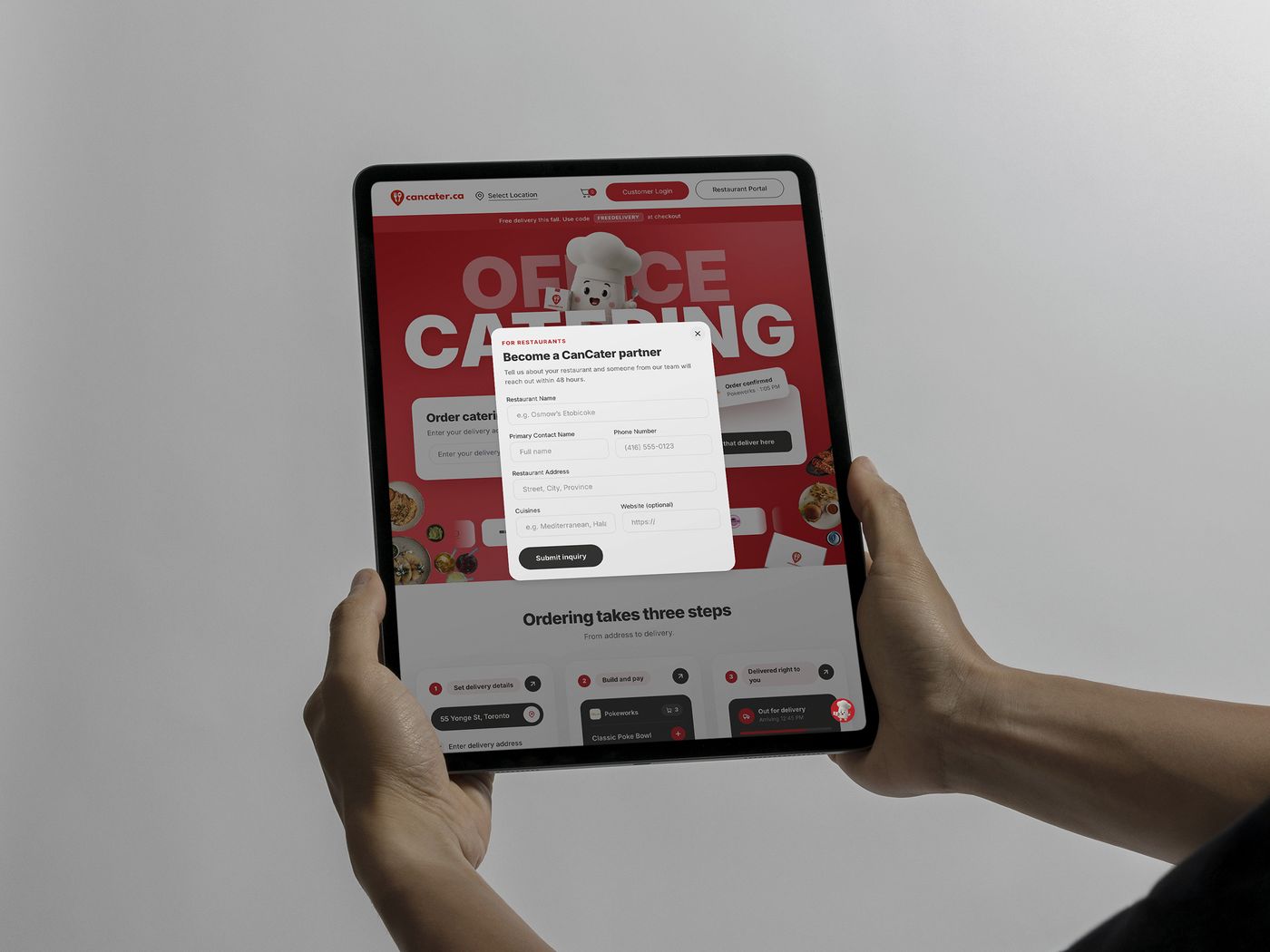
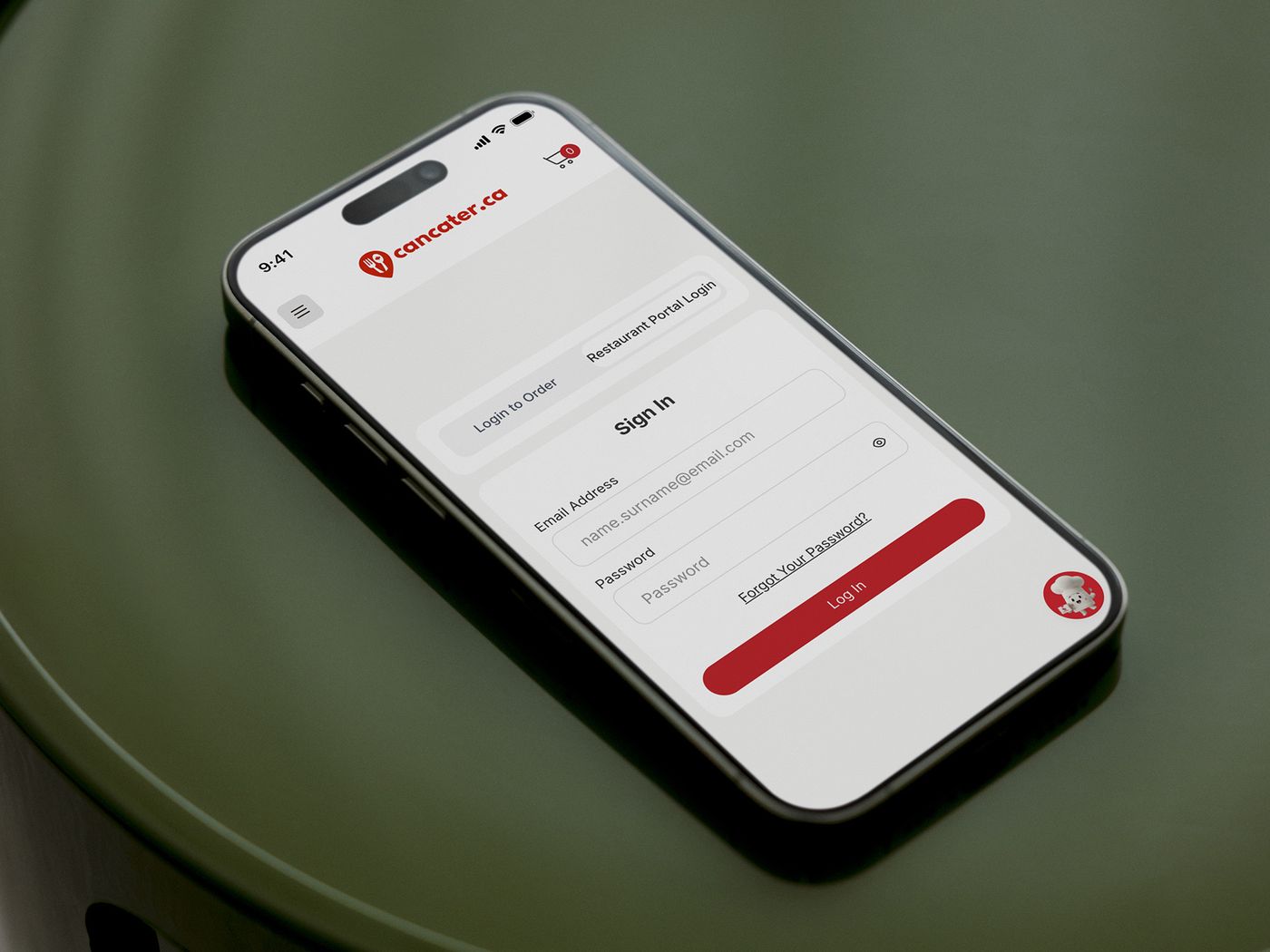
A dedicated partner login, and a partner inquiry flow that turns a restaurant’s details — name, address, cuisines — into an onboarding lead the team follows up within 48 hours.
Corporate accounts & rewards
A separate corporate login for teams that order catering regularly, and a rewards program that lets customers earn free catering.
City pages
Landing pages for Toronto, Mississauga, Brampton and the GTA, so each market has its own entry point from local search.
Design ran from flows to a component system: one family of cards, forms, modals and order-status patterns — the red CanCater mark, rounded white cards, a single black primary action — so every surface, from the partner form to the delivery tracker, reads as the same product.
Development followed the same idea. The platform is built on Next.js and Tailwind CSS and rendered on the server, so every city and restaurant page arrives as real HTML that search engines can read, and every screen holds up from a 390px phone to a wide desktop.
What we watch
We don’t publish numbers we haven’t measured — so this is what the work is held to, not a highlight reel.
- Address entries that turn into a completed order — the only funnel step that matters.
- Share of orders using group ordering, as a read on whether the budget-plus-link model solves a real problem.
- Impressions and clicks on city and cuisine queries across the GTA.
- Repeat ordering by the same organiser, which is the signal that the logistics actually held.
Questions people ask
What is CanCater?
CanCater is a Canadian catering platform that lets you order catering for groups from 400+ restaurants in one place, with delivery across Toronto, Mississauga, Brampton and the wider GTA.
How did you design group ordering?
Around how offices actually order. The organiser sets the address, date and time, then chooses one of two paths: build a single order for the whole room from trays, platters and boxed meals, or set a budget and share a link so everyone picks their own meal. Lead times and per-person pricing sit on each restaurant card, so a same-day lunch and a planned event are easy to tell apart before ordering.
What did Autograph do on the project?
We designed and developed the platform: product design from user flows to a component system, and development of the customer ordering and group ordering experience, the restaurant partner portal and onboarding flow, corporate accounts, and the city landing pages that bring in local catering search demand.
How are the city pages built for local search?
Each market — Toronto, Mississauga, Brampton and the wider GTA — has its own landing page rather than one generic page. The platform is built on Next.js and Tailwind CSS and rendered on the server, so every city and restaurant page arrives as real HTML that search engines can read. Search performance is not yet measured, so no results are claimed.
About the author
Written by Autograph Media — an independent digital and AI studio in Oakville, Ontario, working with businesses across the Greater Toronto Area on web design, development, AI integration and SEO.